See also.
Tubewhacking
Pimlico is the only station on the tube which does not contain any of the letters in the word "Badger". Proof is here at last.
Type in any word to see which stations do not contain its letters. Most people type "badger" first.
Wednesday, December 21, 2011
Badgers (almost) everywhere
Passed on with no specific comment:

I can't transfer it, I'll transferret
Hugh Pennington on swine flu and "the ferret route":
To start growing, the virus has to get deep into the lungs. The surest way for this to happen is to be a South East Asian cockfighter. They stimulate the birds by spitting down their throats; the birds spit back.
Ron Fouchier, a virologist at the Erasmus Medical Centre, Rotterdam, has caused a controversy by creating an H5N1 virus in the laboratory that can spread easily from ferret to ferret. In general, flu behaves in them as it does in humans. So his new virus could have the potential to cause a pandemic with a 60 per cent mortality.[...]
According to information already available, however, Fourchier essentially generated his new virus using the 19th-century approach of growing it in an animal over and over again. After ten transfers, the virus had adapted to ferrets. This experiment does not need complex laboratory facilities. An egg incubator, a supply of fertilised hens eggs and a syringe are all that are needed. I grew litres of virus this way when I used to work on bird flu. And ferrets are freely available: my great-uncle used them to hunt rabbits. The most difficult task would be getting some H5N1 virus.
Wednesday, October 5, 2011
Und ermines!

via Matt P. Vaguely apposite quote:
At Regensburg he crossed the Danube on his cloak, and there made a broken glass whole again; and, in the house of a wheelwright too mean to spare the kindling, lit a fire with icicles. This story of the burning of the frozen substance of life has, of late, meant much to me, and I wonder now whether inner coldness and desolation may not be the pre-condition for making the world believe, by a kind of fraudulent showmanship, that one’s own wretched heart is still aglow.
Thursday, September 15, 2011
A Crime Most Fowl
Here I am, blowing all of my accumulated puns like a heron addict. Sarang probably won't just grouse; he'll remove my authoring privileges soon enough.
Oh well. No egrets.

Oh well. No egrets.
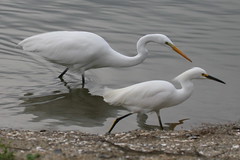


STOATUSBLOG TAKES A TERN FOR THE WORSE

When Sarang gave me publishing rights on this blog, I was a little confused, but I didn't think much of it. Now it appears that Sarang was as naïve as Clarice Starling: a no-talon ass-clown is going to be making posts to this blog, and Sarang will just have to swallow it.
Wednesday, August 31, 2011
When Hermann Göring Wasn't Busy Destroying Populations...
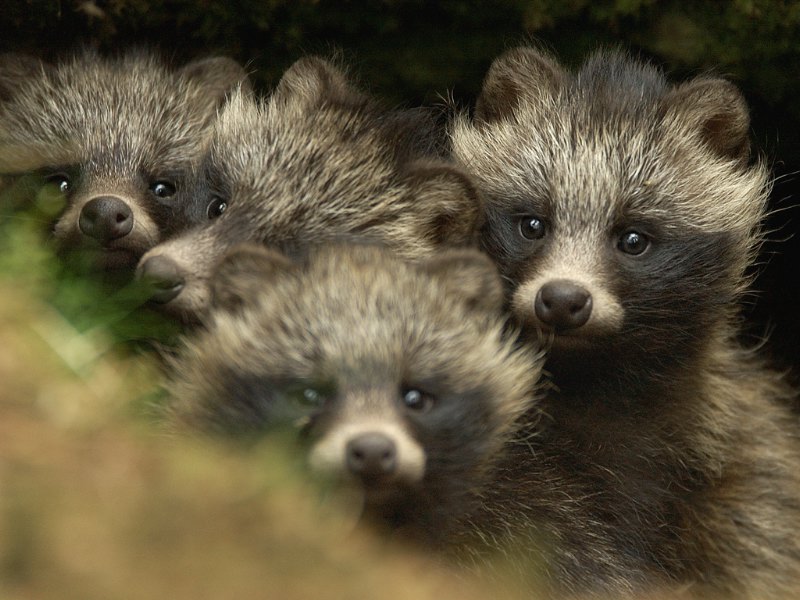
He introduced the raccoon dog, a native of east Asia, to Europe in the 1940s in order to establish a population to be farmed for their fur. The Copenhagen Post reports:
Raccoon dogs that may harbour tapeworms and rabies are threatening to invade Sweden from Denmark, posing a serious risk to its wildlife. . . .The price of neutrality:
Their European population now extends from Italy in the south to Finland in the north where they have decimated populations of frogs and ground-nesting birds. In Finland 100,000 raccoon dogs are shot every year.
Monday, August 29, 2011

Saturday, August 13, 2011
A swarm of stoats

Merrily Harpur (!) on some of the less-known habits of stoats, esp. the phenomenon of stoat packs:
Rarely encountered in the flesh, but common in country tales, stoat packs have long hunted the borderland between folklore and natural history. Thirty years after Sir Alfred's alarming experience, a similar incident was reported by RS Hays in The Field:
...
"Close to the path there was the bole of an uprooted pine tree full of holes. 'From practically every hole,' said the doctor, 'there was a stoat's head peering out at me - possibly 15 or 20 in all.' He struck at them with his gaff and they set up 'a great chattering and squawking', but he failed to hit any of them and succeeded only in bending his gaff. 'As they appeared to be working themselves up to the point of attack,' he admitted, 'I decided to retire in haste.'"
The doctor's disconcerting realisation that every crevice was filling with a stoat's face was echoed by the experience of the writer and naturalist H Mortimer Batten:
"I went into a ruined house called Coltgarth, not far from Burnsall village, and on entering became aware of a hissing and chattering in the wall all round me, and on looking up saw the heads of stoats protruding from numerous crannies above, all very resentful of my presence. It would not be pleasant to be mobbed by such a gathering…"
The stoat (Mustela erminea) is the most enigmatic of the mustelidae - the family that includes weasels, ferrets, martens and otters. We are familiar with the paralysis it can inflict on rabbits, even at some distance, without knowing quite how it does it. H Mortimer Batten related an example in his book Habits and Characters of British Wild Animals, first published in the 1920s:
"Presently I saw a rabbit quite close to me flatten down, flat as a rag, its eyes wide with terror. I guessed what was afoot, and a few seconds later a stoat came out of the wall and sat upright on a flat stone staring at the rabbit. He was obviously gloating over it, knowing it to be helpless, and every now and then he jerked his black-tipped tail into the air in a curiously excitable manner. Then he jumped off the stone and made straight for the rabbit, landing on its back and tearing its ears with his teeth. He also tore at it with his claws, making no attempt to kill it, but torturing it as a cat tortures a mouse. But the rabbit remained motionless, uttering never a sound, so the stoat returned to its perch on the stone and again glared at it in luxurious cruelty…"
This went on several times until Batten could stand it no longer and shot the stoat.
Via Malcolm Eggs.
Thursday, August 4, 2011
One among otters
Sunday, July 24, 2011
Ermine moths as vandals

Ermine moths (see prev.) are in the news:
The moth, or rather its caterpillars, created a stir this May when they were reported to have stripped bare 15 fully grown trees in Shipley Hall Fields, a small but popular municipal park in the Frizinghall area.Source: Guardian
It was not the thousands of inch-long caterpillars that caused consternation but their behaviour, as they wove giant webs over the whole trees, including the trunks, and even the railings of the park. People were so nervous that the park was deserted, and councillors demanded the moth larvae be zapped.
A council worker who went to look said 20 mature trees had completely disappeared under white silk: "It was warm, but it was as if a big frost had hit the park, about minus 40C with hoar frost. The vegetation had disappeared as in a film."
Friday, July 8, 2011
The badger's foot

John Cleveland:
Come keen iambics with your badger’s feet
And badger-like bite till your teeth do meet.
(But "badger" -- like most other mustelids' names -- is of course trochaic.)
Thursday, July 7, 2011
Tomb of the Otters

National Geographic on the latest heap of stones found in Orkney:
Thousands of human bones have been found inside a Stone Age tomb on a northern Scottish island, archaeologists say.The 5,000-year-old burial site, on South Ronaldsay (map) in the Orkney Islands, was accidentally uncovered after a homeowner had leveled a mound in his yard to improve his ocean view. (See Scotland pictures.)Authorities were alerted to the find in 2010 after a subsequent resident, Hamish Mowatt, guessed at the site's significance.Mowatt had lowered a camera between the tomb's ceiling of stone slabs and was confronted by a prehistoric skull atop a muddy tangle of bones....The site has also been dubbed the Tomb of the Otters, because initial excavations revealed prehistoric otter bones and dung amid the human bones.The animal remains indicate that people visited the burial site only sporadically."It suggests the tomb was not entirely sealed and that otters were trampling in and out a lot" throughout the tomb's use, Gibson said."For that to occur, you must think there was a gap of a year or two" between grave visits or burials.
Monday, July 4, 2011
Dog meets badger
Konrad Lorenz, Man Meets Dog:
via Stan Carey.
Many years ago I had a great surprise when I brought home a tame young badger and introduced it to the savage Alsatians which I kept at that time. I fully expected that this strange, wild creature would release all the worst hunting instincts in my dogs, but exactly the opposite was the case: the badger, which had formerly lived in the house of a forester and had obviously been accustomed to dogs, approached them fearlessly, and the dogs, though they certainly sniffed it with an unwonted caution and reserve, made it clear from the first that they did not regard it as game but as a somewhat unusual member of their own kind. A few hours later they were playing with it in unrestrained intimacy [...] From the first the dogs put all their trust in the social inhibitions of the badger and allowed him to roll them on their backs, seize them by the throat, and, according to all the rules of the game, to "throttle" them, just as they would have allowed a friendly dog to do.
via Stan Carey.
Thursday, June 30, 2011


Tuesday, June 28, 2011
Badger kin + bad jerkin

Julian Barnes writes about Jules Renard in the LRB:
he sits at a cluttered desk; behind him is a scruffy bookcase and a calendar showing the first of some month; on the floral wallpaper hangs a looped speaking tube, perhaps for ordering his mid-morning coffee. He looks wary and fierce, badger-like, as if he has just been dragged from his sett, stuffed into a suit that scarcely fits and ordered to face the camera: the result is one of the most ill-at-ease author photos I have ever seen.
Saturday, June 11, 2011
Romps and rafts of otters

Wikipedia:
OED agrees and notes that otter was metanalyzed in the Middle Ages as "a notyr." (I seem to remember having blogged this fact but can't find the post.) A meaning of note:
The word otter derives from the Old English word otor or oter. This and cognate words in other Indo-European languages ultimately stem from the PIE root *wódr̥ which also gave rise to the English word water.[1][2]
An otter's den is called a holt or couch. A male otter is a dog, a female a bitch, and a baby a whelp, kit, or pup.[citation needed] The collective nouns for otters are bevy, family, lodge or romp, being descriptive of their often playful nature, or when in water raft.
c1700 Street-robberies Consider'd 33 Otter, a sailor.
Another:
A fishing device, typically used by poachers or other unlicensed anglers, consisting of a wooden float with baited hooks attached that is paid out on a long line; (also) a similar device used by anglers to retrieve fishing gear that has become snagged.
Mormon replacement therapy
(Posted here because of the riffs on "the Mormon Church’s Head of Public Affairs, Michael Otterson, a master craftsman of the Utahan bland style")
Snippets from James Fenton's review (NYRBlog) of the South-Park-inspired musical "Book of Mormon":
And about the Mormon church's willingness to make adjustments (cf. Russell, "The Mormons had a divine revelation in favour of polygamy, but under pressure from the United States Government they discovered that the revelation was not binding.")
Snippets from James Fenton's review (NYRBlog) of the South-Park-inspired musical "Book of Mormon":
To the perhaps prosaic mind of Michael Otterson, a satire that turns on the supposed irrelevance and ineffectiveness of the Mormon mission to Africa is very much wide of the mark. After all, as he pointed out to the Post’s readers, in the seven years that it had taken the creative team to put together and mount The Book of Mormon, the Mormon Church in Africa had been responsible for bringing clean water to more than four million Africans, getting wheelchairs to 34,000 legless children, and so on. Why should Otterson pay $200 for a ticket to be “sold the idea that religion moves along oblivious to real-world problems in a kind of blissful naiveté”?
He has a point. The comic situation of The Book of Mormon is perfectly serviceable as comedy, but it has no interest at all as satire on the Mormons’ African mission. We are in Uganda, but we might as well be in Kazakhstan, or any kind of nightmare Abroad. From the point of view of the Mormon missionaries, the attitude of the natives toward Almighty God is crudely dismissive, and expressed in language which causes gasps of tickled outrage from the audience. But it is impossible to reconcile this happy-go-lucky indifference to the Supreme Being with what we have encountered in recent history when the African churches have had their say on the future of, for instance, the Anglican church. What often comes back at us out of Africa, by way of Christian culture, is a sharp Victorian rebuke for our back-sliding. It has nothing happy-go-lucky about it.
And about the Mormon church's willingness to make adjustments (cf. Russell, "The Mormons had a divine revelation in favour of polygamy, but under pressure from the United States Government they discovered that the revelation was not binding.")
This willingness, admirable in its modest way, to jettison or modify revelation in order to conform to public opinion, has been characteristic of Mormonism since the long dispute over polygamy: in the end, it would seem, they get the point. They listen to criticism over the decades. They make some furtive adjustments. They clean up their act. [...] In the context of the musical, the openness to ragging, the patience under blasphemous attack, become less mysterious. It is as if they understand the ridicule that they are currently undergoing at the Eugene O’Neill Theater to constitute a sort of hazing. To get through the ordeal they must keep their good humor, and it is worth doing so because, at the end of the hazing, their reward will be a greater acceptance in society.
Subscribe to:
Posts (Atom)